
more about Congestive Heart Failure
Also known as
Heart Failure, Dropsy, or Pulmonary Edema
Description
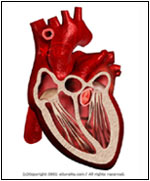 Normal |
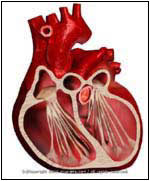 Abnormal |
- The heart has two sides: right and left. The right side of the heart pumps blood though the lungs. The left side of the heart then takes this freshly oxygenated blood, and pumps it to the other parts of the body, including the vital organs. When the left side of the heart is damaged or not working properly, it is unable to pump all the blood it receives. This will cause the fluid in the blood to back up into the lungs. It may also back up further and cause excess fluid in the liver, abdomen, and legs. This backup of fluid is called congestive Heart Failure. The name comes from the fact that Heart Failure causes fluid to fill up (congest) the lungs.
Symptoms
- Shortness of breath
- Shortness of breath on exertion
- Shortness of breath when lying flat
- Leg swelling (edema)
Cause
- Heart damage from a current or previous heart attack
- Cardiac ischemia
- Cardiomyopathy
- Anemia
- Beriberi (thiamin deficiency)
- Hyperthyroidism
- Hypothyroidism
- Untreated High Blood Pressure
- Medications, especially beta-blockers and Verapamil (calcium blocker)
- Hypertrophic Cardiomyopathy
- Chagas’ Disease
- Heart valve damage
- Amyloidosis
- Hemochromatosis
How the diagnosis is made
- Examination:
-
- Lungs — crackles, less often wheezes
- Heart — S3 gallop, murmur (especially Mitral Regurgitation)
- Neck — distended veins
- Enlarged liver
- Enlarged fluid-filled abdomen
- Swollen legs (edema)
- Tests:
-
- Chest X-Ray shows congestion, enlarged heart
- Electrocardiogram may show irregularity or findings consistent with left heart enlargement
- Echocardiogram shows decreased or damaged heart function and/or valve problems
- Cardiac catheterization may show blocked heart vessels
- Swan-Ganz catheter assess of pressures in heart and lungs
- Blood tests:
- Complete blood count to check for anemia
- Thyroid function tests
- Kidney and liver function tests
-
- Blood gas or oximetry will show decreased oxygenation
Treatment
- Acute attack:
-
- Oxygen
- Lasix IV
- Morphine Sulfate IV
- Nitroglycerin paste or IV
- Dobutamine IV
- Amrinone IV
- Nitroprusside
- ACE inhibitors IV
- Chronic management:
- Treat underlying cause, such as thyroid problems
- Interventions:
- Angioplasty (balloon to open vessels) or heart bypass grafts if there are coronary artery blockages
-
- Heart transplant for patients in whom all other treatments fail and they meet certain criteria.
Prevention
- In individuals who already have Heart Failure, not following a low Sodium diet or forgetting to take medications can precipitate an attack. It is especially important to know what foods contain high amounts of hidden Sodium. Foods such as tomato soup or pizza are so high in Sodium they can rapidly lead to an episode of Heart Failure.
Similar Conditions
- Kidney failure
- Liver Cirrhosis
- Asthma
- Acute altitude sickness
- Malnutrition
- Filariasis