|
|
 |
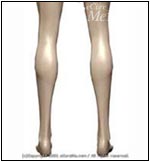
Normal |
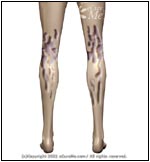
Abnormal |
|
|
-
Varicose
veins are dilated (expanded) veins that lie just under the
surface of the skin. These are normal veins (most often in
the legs) that have become larger than normal. This
condition occurs in about 15% of the population, and is seen
most commonly in women who have been pregnant.
|
 |
- Usually it does not cause any symptoms, and is primarily a cosmetic problem.
- In some cases, it may cause fatigue or pain and discomfort in the leg.
- If left untreated, over time the veins become progressively larger. This can lead to Chronic Venous Insufficiency and associated changes, such as swelling, skin changes, and occasionally ulcers.
- Blood clots may develop in the
varicose veins, particularly in those who are pregnant,
taking birth control pills, or who are bedridden.
|
 |
- The small valves normally located within the veins responsible for moving blood and fluid through the legs may become weak and dysfunctional, allowing blood and fluid to collect in the legs, causing veins to dilate, and the legs to swell.
- Many conditions may cause the valves to become weak. Whatever prevents normal blood flow out of the legs and increases pressure within the veins may be a factor, such as pregnancy, cancer, prolonged standing, or heavy lifting.
- Some patients have inherited
weakness of the veins, while others may have had blood clots
in the leg or some other injury that damaged the valves.
|
 |
- Examination usually reveals enlarged, long veins just under the skin surface.
- Ultrasound (sound
waves used to take pictures) may be used to examine the
valves within the veins.
|
 |
- Compression stockings provide
support to the veins.
- The stockings should not go above the knee.
- They should be used whenever the person is standing or sitting.
- The legs should be kept elevated as much as possible.
- This treatment option is a good
choice for those who do not want surgery, those who do not
have severe varicose veins, older people, and in women who
plan to become pregnant again.
- Surgery -- the varicose veins and
their connecting blood vessels are surgically removed.
- Advised for cases of severe or moderately severe varicose veins.
- If there is an ulcer on the foot,
it should be treated before surgery.
- Compression sclerotherapy -- Sodium
tetradecyl sulfate 1-3 % is injected into the small varicose
veins, causing them to close.
- Recommended for the varicose veins still present after surgery.
- The risks with this procedure include infection of the vein, infection of the skin, and destruction of the surrounding skin if the medicine leaks out of the vein.
- Advise the doctor if you are
taking birth control drugs before sclerotherapy, as such
medications will have to be stopped 6 weeks before the
procedure because of the risk of blood clot formation.
- Treatment is usually successful.
However, in some, varicose veins can develop again. More
surgery or sclerotherapy may be required. Also, some of the
skin changes found in people who have had varicose veins for
a long time may not completely heal.
|
 |
- Other causes of swelling of the leg and dilated veins need to be ruled out. These include blood clots in the leg, cancer, and tumors in the pelvis that may be preventing blood flow out of the leg, or inherited conditions that cause abnormal blood vessels.
|
| | |
If you want your friend to read or know about this article, Click here
 |
|
|