|
|
 |
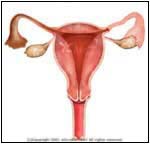
Normal |
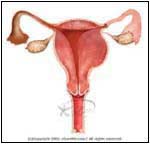
Abnormal |
|
|
-
Uterine
fibroids (or just fibroids) are also known as leiomyomas of
the uterus. They occur in women, and are basically due to
extra tissue that grows on the uterus. The uterus becomes
large and irregular in shape. This is not a cancer, and is
extremely common. There can be one or many fibroid tumors on
the uterus. Treatment depends on the type of symptoms that
it causes.
|
 |
- Many women do not have any symptoms.
- Sometimes, it can cause frequent urination (because it pushes against the bladder), difficulty with passing stool (if it pushes on the intestines), irregular or heavy periods.
- If it becomes large, it can push against other organs in the stomach, or it can cause the stomach to get bigger/distended.
- Sometimes, the blood supply to the fibroid is suddenly cut off, and this can be very painful.
- Some women with fibroids may have problems becoming pregnant.
- In women with fibroids who do become pregnant, they may have a Miscarriage,
premature labor, pain during the pregnancy, or may not be
able to deliver the baby through the vagina if there is a
fibroid in the way. Also, some may have a lot of bleeding
after delivery.
|
 |
- The cause of uterine fibroids is
not known
|
 |
- The most common way to make the diagnosis is by an ultrasound.
- An MRI (magnetic resonance imaging) scan can also be done.
- If necessary, a hysteroscopy (in which a camera is used to look into the uterus) or hysterography (in which a dye is injected into the uterus and X-Rays are taken) can be
done.
|
 |
- No treatment is necessary if the woman does not show any symptoms, but she needs to be checked every 6 months by her doctor.
- If the fibroid's blood supply is cut off, then the woman will have a lot of pain. This is an emergency and needs immediate medical attention. Emergency surgery may need to be done.
- For heavy bleeding, medicines, such as Medroxyprogesterone or Danazol, can be used to help decrease the bleeding.
- If the woman is severely anemic (low blood count), this needs to be treated before any surgery is done.
- Surgery to remove the fibroid needs to be done if it is getting bigger quickly, if it is causing symptoms, or if there is too much bleeding.
- Fibroids that are near the cervix or go through the cervix (the connection between the uterus and the vagina) need to be removed.
- The smaller the fibroids, the less risky the surgery. Therefore, when possible, women are given medicines such as Leuprolide or Nafarelin for two to three months before surgery.
- The following medicines help to shrink the
fibroids:
- Surgery to remove either the individual fibroids or the entire uterus is the main treatment.
- In women who are pregnant or want to become pregnant, the fibroids can be surgically removed and the uterus is left intact.
- In others, the entire uterus is removed. This can be done through the stomach (abdominal hysterectomy), through the vagina (vaginal hysterectomy), or by Laparoscopy-assisted vaginal hysterectomy (a camera is used to help with the surgery).
- Once surgery is done, the person is cured.
- Although women can still become
pregnant if the uterus is left in place, they may have to
have a C-section.
|
 |
- Pregnancy
- Leiomyosarcoma
- Ovarian cancer
- Adenomyosis
|
| | |
If you want your friend to read or know about this article, Click here
 |
|
|