|
|
 |
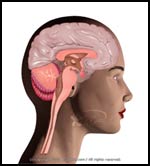
Normal |
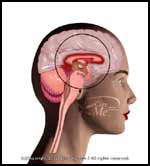
Abnormal |
|
|
- A Subarachnoid Hemorrhage is the bleeding in the subarachnoid space of the brain. This is a tissue area that surrounds the brain, resulting in Stroke symptoms i.e., brain damage.
|
 |
- A sudden onset of the "worst headache" of the person's life. Often described as a "thunder-clap"
- Nausea and or Vomiting
- Loss of consciousness
- Confusion and or Irritability
- Impaired mental function
- Coma
|
 |
- Nuchal (Neck) rigidity
- Signs of meningeal irritation
- Paralysis may be present
- CAT scan to check for the Subarachnoid Hemorrhage.
- If the CAT scan is normal, but Subarachnoid Hemorrhage is suspected, then a lumbar puncture (spinal tap) is performed and examined for blood or xanthochromia.
- Cerebral Angiogram, where a dye is injected and X-Rays of the blood vessels in the brain are taken, may be necessary to find the site of bleeding (e.g., a ruptured aneurysm).
- MR Angiogram may be considered, but it is not as accurate as a Cerebral Angiogram
|
 |
- Supportive measures such as strict bed rest and avoidance of straining in any way (even for a bowel movement)
- Treat severe Hypertension, but do not lower the diastolic blood pressure (the lower number) below 100 mm Hg.
- Dilantin (Phenytoin) is often prescribed for seizure prevention.
- Surgical intervention, e.g., the repair of a ruptured Cerebral Aneurysm or arteriovenous malformation if the patient can be stabilized.
|
 |
- The patient needs immediate emergency medical treatment.
|
| | |
If you want your friend to read or know about this article, Click here
 |
|
|