|
|
 |
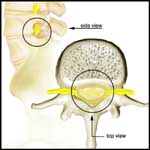
Normal |
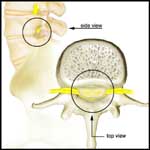
Abnormal |
|
-
The lumbar
spine is the part of the spinal column situated in the lower back. Within this bony structure is a space (canal) containing the nerves that carry signals from the brain to the lower half of the body. Stenosis (narrowing) of this canal puts pressure on the cauda equina nerve roots, causing various symptoms in the lower half of the body. In most adults, this occurs over many years due to simple wear and tear from daily living (degenerative changes).
|
 |
- Leg pain
- Numbness and tingling of feet and toes
- Both legs may be involved
- Leg weakness
- Burning or pain in the buttocks, especially after walking
- Flexion of spine, such as the fetal position, tends to relieve discomfort.
- Extension of the spine is uncomfortable.
- In severe cases, loss of bladder and bowel control may be seen.
|
 |
- Falls and accidents
- Arthritis
- Degenerative changes
- Acromegaly
- Paget's disease
- Ankylosing Spondylitis
- Congenital defect
- Following back surgery, such as laminectomy or spinal fusion
|
 |
- Neurological exam is often normal.
- X-Ray of the spine may be helpful.
- CT Scan and MRI will detect spinal narrowing.
- Myelography, which is performed by injecting a dye into the spinal canal and then taking an X-Ray, may detect obstruction.
|
 |
- Analgesics (pain killers), bed rest, and physical therapy may help certain cases of Lumbar Spinal Stenosis.
- For symptomatic stenosis, surgical decompression is recommended.
|
| | |
If you want your friend to read or know about this article, Click here
 |
|
|