|
|
 |
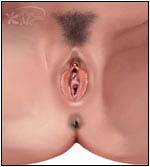
Normal |
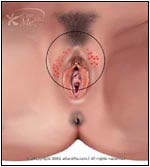
Abnormal |
|
|
- Herpes is caused either by
Herpesvirus 1 or Herpesvirus 2. Both can affect the
oral and genital areas, but Herpesvirus 1 exists predominately in the
mouth, and Herpesvirus 2 in the
genitals.
- Herpesvirus 1 virus occurs
in about 85% of all people.
- Herpesvirus 2 is sexually transmitted. The first lesion may have no symptoms. The lesions (vesicles, blisters, open sores) may occur up to two weeks after contact with someone who has the virus. The virus may become latent and live in the nerve cells to return at any time, causing Cold Sores in or near the same locale. This occurs
whenever the body is under stress (from illness, physical or
emotional stress).
- Sunlight, hormonal changes, pregnancy, drugs, and food allergies may also stimulate a recurrence. The blisters are loaded with the herpes virus, which is highly communicable to others, until the lesion heals. Anyone with active oral lesions should avoid kissing or giving oral sex, and should wash the hands frequently until the lesion is completely healed. The virus may also be transmitted to newborns.
|
 |
- Small groups of blisters on top of
a red base
- Lesions appear near the mouth, on
the lips, tongue, gums, and the nose.
- There is tingling or burning before
the blisters appear.
- There is mild to moderate pain.
- The blisters are fluid filled, and
tend to ooze and crust.
- Lesions last 7-10 days, and usually
heal without any scarring.
- During the acute period, the virus
can be transmitted to others via direct contact.
- Virus particles can be isolated from saliva for weeks after the blisters are gone.
|
 |
- Tzanck smear
- Immuno-fluorescent antibody slide
- Viral culture
|
 |
- Denavir ointment for Cold Sores
- Oral acyclovir, Famvir, or Valtrex
|
 |
- In patients with AIDS (and rarely in those free of AIDS), encephalitis (brain
infection) may occur.
- The esophagus may be infected by
Herpesvirus, causing an Esophagitis.
|
| | |
If you want your friend to read or know about this article, Click here
 |
|
|