|
|
 |
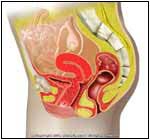
Normal |
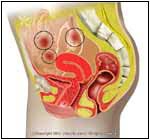
Abnormal |
|
|
- The endometrium is the tissue
located inside the uterus, as the inner lining.
Normally, the uterus is the only place this tissue should be
found. In the course of the normal menstrual cycle,
the endometrium changes in size, structure, and function in
direct relation to fluctuations in female hormones.
Endometriosis occurs when endometrial tissue becomes located
outside the uterus.
- The prevalent theories of the cause
of endometriosis include retrograde menstruation
(postulating a back flow of endometrium outside the uterus
during menstruation), and the spread of endometrium via
lymphatic channels (i.e., blood vessels) to other
sites. Common abnormal places for this to occur are
around the ovaries, fallopian tubes (tubes that carry eggs
from the ovaries to the uterus), colon, and rectum. It
rarely spreads to distant sites, such as the vagina, cervix,
lungs, legs, stomach, spleen, gallbladder, and breasts.
- Since endometrial tissue fluctuates in size and structure in the course of menstrual flow, women with endometriosis will notice a pattern of pain or bleeding that correlates with their cycle. For example, if endometriosis occurs in the colon (bowels), then at the end of their cycle women with this condition will experience pain and Constipation caused by the tissue pushing down on the bowels.
|
 |
- Aching pain usually begins 2-7 days
before menstrual period starts and increases until menstrual
flow wanes (i.e., toward the end of the period).
- Pain types include:
- Uterine pain
- Abdominal pain
- Rectal pain
- Vaginal bleeding
- Rectal bleeding
- Infertility (inability to become pregnant)
|
 |
- May be no findings
- Nodules may be felt on
exam
- Ultrasound --
limited value
- MRI -- most helpful noninvasive
test
- Barium Enema if
rectal involvement suspected
- Laparoscopy -- small
incision in the belly button is made for a scope to pass
through.
- Laparotomy (open surgical exploration) is only done if laproscopy is not possible or not conclusive.
|
 |
- The goal is to suppress ovulation
in the menstrual cycle by manipulating hormone production.
The following treatments are commonly used to achieve this
end:
- Nafarelin nasal spray a
gonadotropin-releasing hormone agonist (GnRH).
- Leuprolide acetate (GnRH
agonist) injection
- Zoladex (GnRH agonist) implant.
- Danazol -- an androgen
(male-like) drug. Side effects that can be
bothersome include acne, excess facial hair growth,
weight gain, and decreased breast size.
- Oral birth control pills
- Medroxy-Progesterone acetate and
oral estrogen
- Anti-inflammatory medications-especially Anaprox or Motrin
- Narcotic pain medications, e.g.,
Tylenol with codeine
- Calcium
supplementation is recommended when using GnRH
therapy
- The endometrial tissue located in
abnormal places is removed. Surgery is usually
performed if there is extensive endometriosis, infertility
(problems getting pregnant), or severe pain that is not
very responsive to medications.
- If future pregnancy is not desired, removal of the ovaries can be performed. This is usually curative since the female hormone levels are substantially reduced.
|
 |
|
| | |
If you want your friend to read or know about this article, Click here
 |
|
|