
more about Cerebellar Hemorrhage
Also known as
Intracerebellar hemorrhage or Stroke of the Cerebellum
Description
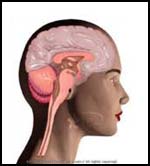 Normal |
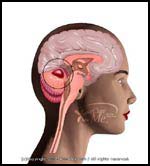 Abnormal |
- The cerebellum is the part of the brain located on the lower backside of the skull (just above the neck). The cerebellum plays a major role in maintaining balance. Cerebellar hemorrhage occurs when bleeding takes place in the cerebellum, usually from a stroke.
Symptoms
- Headaches in lower back of skull
- Vomiting
- Balance problems with walking
- Dizziness
- Vertigo (“spinning sensation”)
- Double vision
- Closed eyelid
- Rapid eye movements
- Speaking difficulties
- Swallowing difficulties
Cause
- High Blood Pressure
- Heavy alcohol consumption
- Cocaine
- Arteriovenous malformations
- Brain Aneurysm
- Blood thinners such as Coumadin
How the diagnosis is made
- CT scan for most cases
- MRI in unusual cases
- Angiography (dye injected and X-Rays taken) to look for Brain Aneurysms if suspected
Treatment
- Of elevated blood pressure — cautiously — once cerebellar hemorrhage has occurred (done in hospital by a physician)
- Neurosurgical evaluation to consider removal of hemorrhage (blood clot) in brain
- Mannitol or similar agent to lower the pressure in the brain
Complications
If bleeding compresses the brainstem, confusion, Coma, and even death may occur
If You Suspect this Condition
- Seek immediate emergency medical treatment. This condition can lead to permanent disability and death.
Prevention
- The most common cause is poorly controlled High Blood Pressure (hypertension). It is important to take blood pressure medications as prescribed, and to have your blood pressure followed carefully by you and your physician.
Similar Conditions
- Cerebral hemorrhage
- Brain tumor
Miscellaneous
- Warning
– Do not take aspirin or other blood thinner for this condition. It will make it much worse.